About

Technology is not only systems. It is capability, people and decisions.

My path moved from systems engineering and infrastructure into architecture, product and technology leadership. I focus on cross-disciplinary problems; the common thread is understanding boundaries, building ownership, and turning complexity into operable capability.
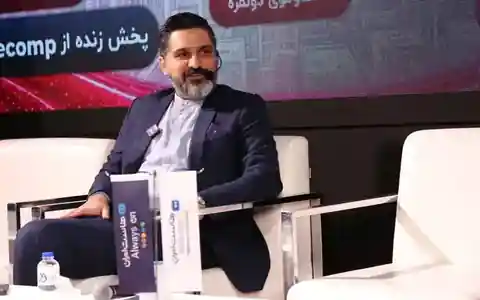
Reza Behroozi speaking on a technology panel

Manifesto

A good system does more than deploy. It remains understandable, has ownership, takes failure seriously, and lets the team make the next move without heroics.

How I think

Principles that survive a change of domain.

Cloud, networks, AI and databases differ, but authority, ownership, failure and evidence remain the recurring questions.

What I Care About

Build capabilities that remain understandable, operable and evolvable after initial delivery.

Problems I Work On

Cross-disciplinary problems across AI, cloud, platforms, networks, infrastructure, reliability and product engineering.

How I Think

Start with authority, state, failure and ownership, and keep trade-offs explicit.

Why People Matter

Good architecture does not endure without teams that have context and ownership.

Leadership principles

What I do not compromise on.

Truth matters more than a green dashboard.

Success should come from runtime readback and evidence.

Complexity needs an owner.

Every authority and failure domain needs explicit ownership.

AI may reason; authority stays governed.

Policy, approval and execution remain auditable.

Strong teams do not depend on one person.

Context, ownership and decision frameworks scale good decisions.

Technology must connect to organizational direction.

Roadmaps start from required capability, not a tool catalog.

Founder, 4SO Lab

Building a system for building systems.

I shaped 4SO Lab as an engineering practice for framing hard infrastructure problems, defining authority and failure boundaries, using AI and automation responsibly, building real products, and checking source-level claims against runtime behavior. The goal is not presentation-only prototypes; it is capability that can be installed, changed, failed, recovered and verified with evidence.

4so.ir ↗
ProblemFrameDesignBuildVerifyRunLearn4SO Lab
  1. Problem
  2. Frame
  3. Design
  4. Build
  5. Verify
  6. Run
  7. Learn

Career context

From deep engineering to executive responsibility.

I see roles not as a decorative timeline but as the context in which technical and executive judgment formed.

  1. Chief Technology OfficerHostiran

    Technology leadership focused on aligning organizational direction, platform and infrastructure architecture, team capability and dependable execution.

    Architectural ChallengeHeterogeneous legacy stacks, the imperative for cloud infrastructure modernization, and transitioning fragmented manual operations into standardized platform capabilities.
    Strategic LeverDecoupling control and data planes, redefining architectural governance, prioritizing service lifecycle, and establishing an evidence-grounded engineering culture.
    Durable OutcomeEstablished private cloud platforms, automated cluster lifecycle, standardized database services, and substantively enhanced the engineering team’s delivery capability.
  2. IT Advisor to the CEOSaman Bank

    Advisory work at the boundary of executive decision-making and technology, translating technical trade-offs into organizational choices.

    Architectural ChallengeObjective evaluation of enterprise architecture proposals, core modernization initiatives, and operational risk forecasting prior to resource commitment.
    Strategic LeverArticulating reliability and security trade-offs, looking past vendor claims, and emphasizing architectural reversibility.
    Durable OutcomeDelivered a transparent decision framework for technical investments, reduced selection ambiguity, and safeguarded critical service continuity.
  3. Systems Infrastructure DirectorAsiatech

    Systems infrastructure leadership with an operational focus on reliability, ownership, change capacity and standardization.

    Architectural ChallengeHigh system throughput, wide equipment heterogeneity, and the requirement for uninterrupted business continuity at nation-wide scope.
    Strategic LeverTransitioned from isolated node administration to unified automation, separated failure domains, and standardized base Linux configurations.
    Durable OutcomeSubstantially curtailed infrastructure incident recurrence, stabilized distributed services, and built specialized teams with clear ownership.
  4. Senior Charging EngineerMobinNet Telecom

    Engineering experience in telecom environments where state, integration and operational continuity matter.

    Architectural ChallengeExtreme zero-tolerance for computational divergence, real-time transaction processing, and absolute persistence requirements.
    Strategic LeverRigorous state reconciliation, simulation-driven change validation, and rollback protocols that preserve in-flight traffic.
    Durable OutcomeDependable runtime integrity for mission-critical rating and charging systems and deep operational fluency in resilient architectures.
  5. Senior Systems EngineerAsiatech

    A deep foundation in Linux, systems engineering and infrastructure operations that later expanded into architecture and technology leadership.

    Architectural ChallengeOperating and troubleshooting heterogeneous Linux servers, storage fabrics, and core services prior to modern orchestration tooling.
    Strategic LeverReliance on native Unix toolchains, structured scripting, kernel-level telemetry, and rigorous load profiling.
    Durable OutcomeDeveloped a first-principles understanding of system internals, deep Linux kernel fluency, and the foundational bedrock for subsequent leadership.

Start a conversation

If technology should move your organization forward rather than hold it back, let’s talk.

The first conversation is about your problem, not about me: where you are stuck, what is at stake and whether I am the right person to solve it.

Bring the problem